Disclosure: This article contains affiliate links. We may earn a commission if you purchase through them, at no additional cost to you.
Note: This overview is based on current manufacturer specifications and published documentation. We have not personally tested the Kingbull Hunter 2.0S.
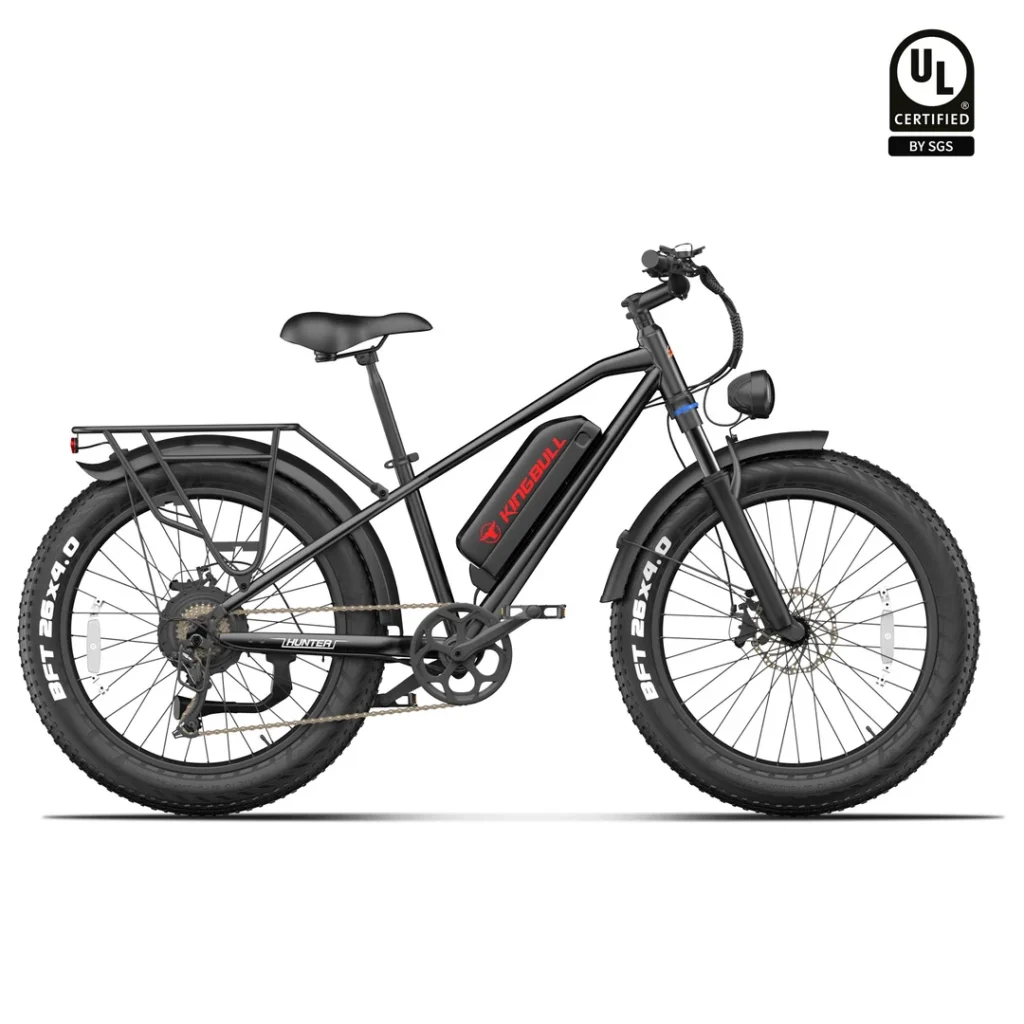
The Kingbull Hunter 2.0S is a step-over fat-tire electric bike designed for riders who want a combination of everyday usability, longer-range capability, and the ability to handle more than smooth pavement.
According to Kingbull’s current specifications, the Hunter 2.0S uses a 750W rear hub motor, an 864Wh lithium-ion battery, 26 × 4-inch fat tires, and hydraulic brakes. Kingbull lists a top speed of up to 28 mph and a maximum claimed range of up to 80 miles under ideal riding conditions.
It also has a rear rack, front suspension, seven-speed Shimano drivetrain, five pedal-assist levels, and a twist throttle, making it an interesting option for riders who want one e-bike that can handle commuting, recreational riding, and rougher surfaces.
In this guide, we’ll look at the Hunter 2.0S specifications, features, strengths, limitations, and the type of rider it may suit best.
Kingbull Hunter 2.0S at a Glance
The Hunter 2.0S is a full-size, step-over fat-tire e-bike aimed at riders who want more capability than a basic pavement commuter.
Key published specifications include:
- Motor: 750W brushless rear hub motor, up to 1300W peak
- Battery: 48V 18Ah / 864Wh lithium-ion battery
- Claimed range: Up to 80 miles under ideal riding conditions
- Top speed: Up to 28 mph
- Tires: 26 × 4.0-inch fat tires
- Brakes: Hydraulic brakes
- Drivetrain: Shimano 7-speed
- Pedal assist: 5 levels
- Throttle: Twist throttle
- Bike weight: About 77 lb
- Maximum payload: 400 lb
- Rear rack capacity: Up to 150 lb
- Recommended rider height: Approximately 5’3″ to 6’6″
Those specifications position the Hunter 2.0S as a relatively heavy-duty e-bike with enough battery capacity and cargo capability for commuting, recreational riding, trails, and outdoor use. The 80-mile figure is a manufacturer maximum under ideal conditions; real-world range will vary with assist level, rider and cargo weight, terrain, weather, tire pressure, and speed.
Motor and Performance
The Kingbull Hunter 2.0S uses a 750W brushless rear hub motor, with Kingbull advertising up to 1300W peak power. That gives the bike enough output for commuting, recreational riding, hills, and rougher surfaces where a lower-powered city bike may feel less capable.
Kingbull lists a top speed of up to 28 mph. The bike also includes five pedal-assist levels and a twist throttle, giving the rider several ways to control how much motor assistance is used.
The Hunter 2.0S uses a cadence sensor rather than a torque sensor. A cadence sensor responds when it detects that the pedals are turning, so the motor assistance can feel more direct and noticeable than on bikes that use torque-based assistance.
This setup should appeal most to riders who want strong, straightforward motor assistance rather than a more natural-feeling pedal response.
The bike also includes a walk mode, which Kingbull lists at roughly 3.0 to 3.7 mph, which can help when pushing a 77-pound e-bike up a ramp, through a crowded area, or alongside a trail.
Battery and Range
The Hunter 2.0S uses a 48V 18Ah lithium-ion battery with 864Wh of capacity. Kingbull rates the bike for up to 80 miles of range under ideal riding conditions, which puts it well above many basic commuter e-bikes on paper.
That 80-mile figure should be treated as a manufacturer maximum rather than a guaranteed real-world result. Actual range will vary based on pedal-assist level, rider and cargo weight, terrain, speed, wind, temperature, tire pressure, and how much throttle is used.
The battery is removable, which can make charging more convenient if the bike is stored somewhere without an outlet nearby. Kingbull also lists a US-standard 2.0A smart charger for the Hunter 2.0S.
For riders planning longer commutes or weekend rides, the larger 864Wh battery is one of the Hunter 2.0S’s more attractive features because it offers more reserve capacity than many smaller commuter-focused e-bikes.
Fat Tires, Suspension and Ride Comfort
The Hunter 2.0S uses 26 × 4.0-inch CST all-terrain fat tires, which are designed to provide more traction and stability on loose or uneven surfaces such as gravel, dirt, sand, snow, and rough pavement. Kingbull also describes the tires as puncture-resistant.
Up front, the bike uses a front suspension fork with a lockout function. Kingbull says the suspension helps absorb bumps and vibrations, while the lockout can improve efficiency on smoother roads.
The combination of wide tires, front suspension, and an ergonomic saddle should make the Hunter 2.0S more comfortable on rougher surfaces than a basic narrow-tire commuter bike.
The tradeoff is weight and rolling resistance. Fat-tire e-bikes are generally heavier and can feel less nimble than lighter city bikes, so riders who mainly use smooth pavement may prefer something smaller and lighter.
Brakes, Gearing and Everyday Control
The Hunter 2.0S uses hydraulic disc brakes, which generally provide stronger, more consistent stopping power than basic mechanical disc brakes and require less hand effort at the lever.
For gearing, the bike uses a Shimano 7-speed drivetrain, giving riders several gear choices for climbing, cruising, and riding without maximum motor assistance.
The combination of pedal assist, twist throttle, and conventional gearing gives the rider several ways to control effort and speed depending on terrain and riding style.
The bike also includes an LCD display for monitoring ride information such as speed, battery level, assist mode, and trip data.
Because the Hunter 2.0S is a heavier fat-tire e-bike, strong braking and predictable controls are especially important when riding downhill, carrying cargo, or traveling at higher assisted speeds.
Cargo Capacity and Practical Use
The Hunter 2.0S is designed to carry more than just the rider. Kingbull lists a maximum payload of 400 pounds and a rear rack capacity of up to 150 pounds.
That makes the bike useful for more than recreational riding. It can also support commuting, grocery runs, work gear, or other cargo when the load is secured properly and kept within the manufacturer’s limits.
The rear rack is especially useful because it gives riders a built-in place to add panniers, baskets, or other compatible cargo accessories.
The bike’s heavier frame, fat tires, and larger battery also make it feel more like a utility-focused e-bike than a lightweight city bike.
Riders who expect to carry cargo regularly should still pay attention to overall balance, braking distance, tire pressure, and how the extra weight affects range and handling.
Who Is the Kingbull Hunter 2.0S Best For?
The Kingbull Hunter 2.0S is likely to appeal most to riders who want a powerful, full-size e-bike that can handle more than smooth pavement.
It may be a good fit for:
- Riders who want a fat-tire e-bike for mixed terrain
- Commuters who want a larger battery and strong motor assistance
- Riders who expect to carry cargo on the rear rack
- People who want both pedal assist and throttle control
- Taller or heavier riders who need a higher payload rating
- Recreational riders who want something capable for gravel, dirt, and rougher roads
It may be less ideal for riders who want a lightweight bike, easy lifting, narrow storage, or a more compact city-bike feel.
Because the Hunter 2.0S weighs about 77 pounds, riders should also consider whether they will need to lift it onto a rack, carry it up stairs, or move it frequently without motor assistance.
Pros and Cons of the Kingbull Hunter 2.0S
Based on the published specifications, the Hunter 2.0S offers a strong mix of power, battery capacity, cargo capability, and rough-surface comfort, but it also has some tradeoffs.
Pros
- 750W motor with strong peak output
- Large 864Wh battery
- Up to 80 miles of claimed range under ideal conditions
- 26 × 4-inch fat tires for mixed terrain
- Hydraulic disc brakes
- Rear rack with substantial cargo capacity
- Pedal assist plus twist throttle
- High 400-pound total payload rating
Cons
- Heavy at about 77 pounds
- Cadence sensor may feel less natural than a torque sensor
- Fat tires can feel slower or less nimble on smooth pavement
- Step-over frame may be less convenient for riders with limited mobility
- Large size may be harder to store or transport
For riders who value power, range, cargo capacity, and all-terrain capability more than low weight or compact size, the Hunter 2.0S looks like a strong option on paper.
Is the Kingbull Hunter 2.0S Worth Considering?
Based on its published specifications, the Kingbull Hunter 2.0S is worth considering for riders who want a powerful fat-tire e-bike with a large battery, strong cargo capacity, and enough versatility for commuting, recreational riding, and rougher surfaces.
The biggest strengths are its 864Wh battery, 750W motor, hydraulic brakes, 400-pound payload rating, and 26 × 4-inch tires.
The biggest tradeoffs are its 77-pound weight, large overall size, and cadence-sensor setup, which may not suit riders who want a lighter, more natural-feeling city bike.
Riders should also remember that manufacturer range figures are estimates under favorable conditions. Real-world range can be lower depending on terrain, assist level, cargo, weather, speed, and rider weight.
For the right rider, though, the Hunter 2.0S offers a lot of capability at a relatively accessible price point compared with many premium fat-tire e-bikes.
Frequently Asked Questions About the Kingbull Hunter 2.0S
How fast does the Kingbull Hunter 2.0S go?
Kingbull lists a top speed of up to 28 mph. Actual speed can vary based on rider weight, terrain, battery level, tire pressure, and local e-bike regulations.
How far can the Hunter 2.0S go on one charge?
Kingbull advertises up to 80 miles of range under ideal conditions. Real-world range will usually vary depending on assist level, throttle use, hills, wind, rider and cargo weight, temperature, and riding speed.
Does the Hunter 2.0S have a removable battery?
Yes. The Hunter 2.0S uses a removable 48V 18Ah / 864Wh battery, which can make charging easier if the bike is stored away from an outlet.
Is the Hunter 2.0S a step-through bike?
No. The Hunter 2.0S uses a step-over frame. Riders who want easier mounting and dismounting may prefer a step-through model instead.
Can the Hunter 2.0S carry cargo?
Yes. Kingbull lists a 400-pound maximum payload and up to 150 pounds on the rear rack, giving it useful cargo capability when loads are secured properly.
Is the Hunter 2.0S good for rough terrain?
Its 26 × 4-inch fat tires, front suspension, hydraulic brakes, and higher-powered motor make it better suited to gravel, dirt, rough roads, and mixed surfaces than a basic narrow-tire commuter e-bike.
Bottom Line: Kingbull Hunter 2.0S
The Kingbull Hunter 2.0S is a powerful step-over fat-tire e-bike built for riders who want more than a basic commuter.
Its 750W motor, 864Wh battery, hydraulic brakes, 26 × 4-inch tires, rear rack, and high payload capacity make it especially appealing for mixed-terrain riding, longer trips, cargo use, and riders who want a larger, more capable e-bike.
The main tradeoffs are its 77-pound weight, larger size, and cadence-sensor setup, so it may not be the best choice for someone who wants a lightweight or highly nimble city bike.
Based on the published specifications, the Hunter 2.0S looks strongest for riders who prioritize power, range, cargo capacity, and all-terrain capability.
Related reading: Compare step-through vs step-over e-bikes and learn how long an e-bike battery lasts.